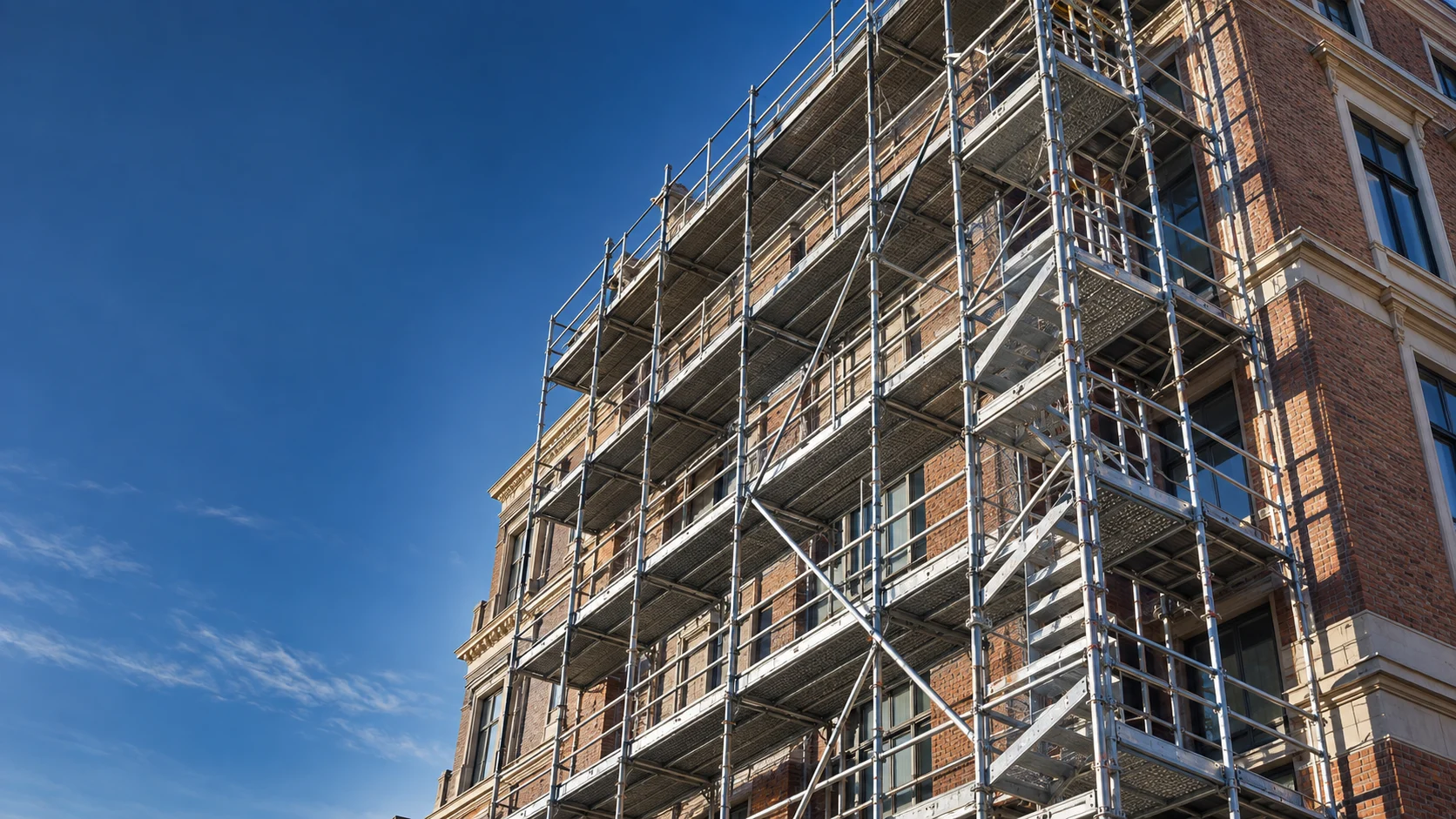
Describe materials being removed, replacement materials arriving and continuing use around the building. Together, these establish the access and working-space questions that need assessment.
Which activities follow each other along the wall?
Distinguish inspection, removal of old pointing, cleaning, local brick repairs and replacement pointing. Not every façade treatment includes the same sequence, and different elevations may progress separately. Ask the specialist which surfaces require access at the same time.
Identify awkward areas above windows or behind balconies. This gives the scaffold provider a recognisable series of activities rather than an ambiguous request to repair the façade. Previously hidden damage may alter the scope later, so establish how new information reaches the person responsible for assessing changes to access.
Explore this subject through Scaffold netting.
How will debris and replacement materials move?
Repair work removes old material while bringing tools and replacement products to the workplace. Ask the contractor to explain those movements and when materials will remain on a platform. A container of debris and a supply of mortar serve different purposes, but both form part of the loading situation.
Do not translate them into a self-selected safe number of containers. The provider needs the intended use for assessment. Mention any proposed street container or temporary storage area and identify who handles the coordination needed outside the building boundary.
Explore this subject through Toe board.
Which surrounding activities must remain possible?
Repointing may take place directly above a front door, courtyard or busy pavement. Identify everyday uses around the elevation and discuss the method with the responsible parties. Scaffold netting, screening and toe boards have different functions rather than being interchangeable remedies.
A desired outcome, such as limiting material spread, needs professional translation into suitable measures. This page does not guarantee that a particular covering contains dust or protects the public. The method, arrangement and surroundings must be considered together before assuming a proposed protective provision is appropriate.
Explore this subject through How should you describe material handling for masonry scaffolding?.
How will the final stage be coordinated?
Checks, cleaning and local corrections can still require access after most pointing appears finished. Ask the façade specialist when the structure can genuinely be released for removal. Discuss making good around attachment locations and identify the party returning to complete that work. Removal in stages may affect planning and execution, so raise it before the final week. A calendar date without reference to the remaining tasks provides little certainty.
Include the expected sequence and the parties using the scaffold successively in the enquiry. Label areas needing local brick replacement separately from surfaces requiring pointing only. Their material movements may differ. Showing where removal happens first and where rebuilding follows makes those temporary differences visible, instead of hiding them inside one general façade-repair description that suggests identical tasks along the entire elevation.
Explore this subject through Give masonry work room to progress. and Give your scaffold brief a shape..
One more
thing.
Is repointing equivalent to painting for scaffold use?
Not necessarily. Materials, tools and work sequence can differ. Have the intended use assessed explicitly instead of assuming an existing painting arrangement is suitable.
Can I attach scaffold netting later myself?
Do not do so without agreement. Covering changes the situation and may affect the structure. Ask the responsible provider to assess and arrange any suitable alteration.
Should debris removal appear in the scaffold order?
At minimum, clarify its interface with the work and who supplies the provision. Debris handling is not automatically included because the scaffold supports repointing.