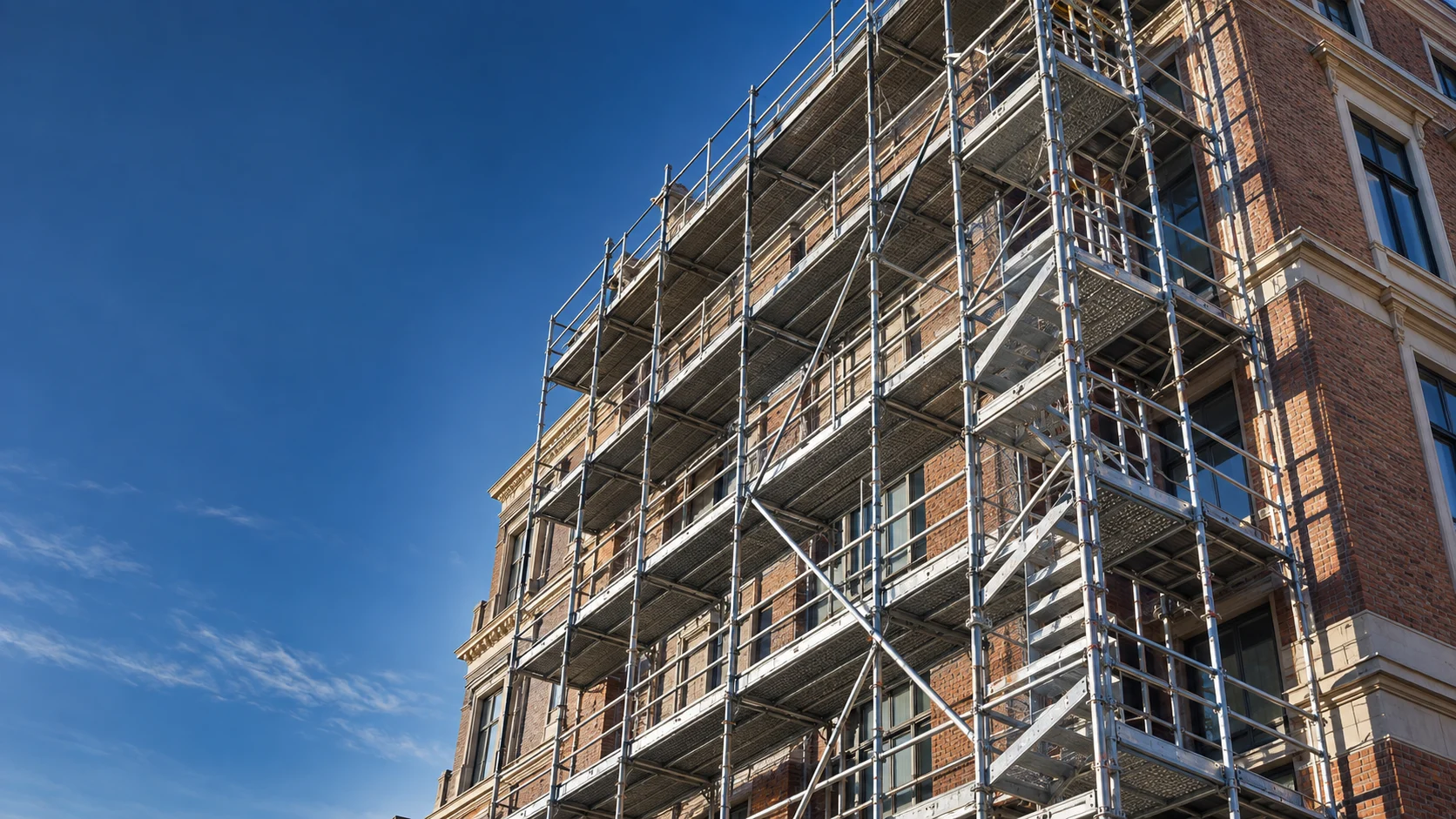
Identify delicate finishes, previous repairs and uncertainty about the wall construction. The appearance of an older elevation does not establish an appropriate support or attachment arrangement.
Which façade features need particular care?
An older elevation may contain stone ornament, thin render, repaired joints or sensitive window frames. Describe those elements individually and explain the maintenance planned around them. Photographs reveal visible differences but cannot confirm conditions behind the surface.
Share documentation about previous repairs where available. This allows the provider to understand restrictions before an apparently ordinary strip of wall becomes a complication during site preparation. Include any requirements already supplied by the owner or building manager, making clear which conditions are confirmed and which still need clarification.
Explore this subject through Anchoring.
How should attachment conditions be assessed?
Anchoring may form part of the preparation discussion. Suitability depends on the actual construction and proposed scaffold, not simply the visible masonry type. This guide prescribes no anchor products, quantities or testing values.
Ask what information is needed to assess an attachment plan and how uncertain areas will be investigated. A requirement to avoid visible damage matters, but does not itself establish a workable technical alternative. Bring the restriction and possible arrangements into the same discussion rather than treating an aesthetic preference as a completed structural solution.
Explore this subject through Anchoring plan.
How do conservation conditions differ from scaffold assessment?
If special conditions or permissions apply to the property, include the relevant documents in the project information. An owner may have requirements concerning contact with finishes or treatment of attachment points. Any additional public procedure needs checking against the particular property; age alone cannot answer that question.
Agreement about appearance also does not replace assessment of the scaffold arrangement. Treat conservation, permission and structural suitability as connected subjects with clearly identified responsibilities. This keeps an approval concerning one issue from being misunderstood as approval covering the entire installation.
Explore this subject through What changes when scaffolding supports external insulation work?.
What should be agreed about making good?
Agree how visible contact points are recorded and who checks the specified finish after removal. Distinguish existing damage, planned façade repairs and work associated with the scaffold itself. Avoid a vague promise that everything will become invisible when the expected finish has not been discussed. Painting or repointing may need coordination with the sequence of making good and dismantling. Add these matters to the enquiry alongside dimensions and duration.
A clear record helps the owner, façade contractor and scaffold provider understand how their separate tasks meet at the end of the project. A repair specification may contain conditions not visible in photographs, particularly where neighbouring finishes require different treatment. Share relevant passages and identify the current version. If the façade design changes during work, pass that revision to the provider so technical discussions do not continue around a finish that is no longer planned.
Explore this subject through Façade access that fits the work. and Give your scaffold brief a shape..
One more
thing.
Is every older property a protected monument?
No. Do not infer status from appearance or estimated age. Check the particular property and any applicable conditions through the owner and relevant authorities.
Can anchoring always be avoided?
This website cannot determine that. Explain the restrictions and request an assessed arrangement; never remove or substitute existing connections yourself.
Who makes good attachment points afterwards?
Record responsibility, required finish and inspection timing in the order. Without an agreement, the parties may assume different repairs are included in their respective scopes.