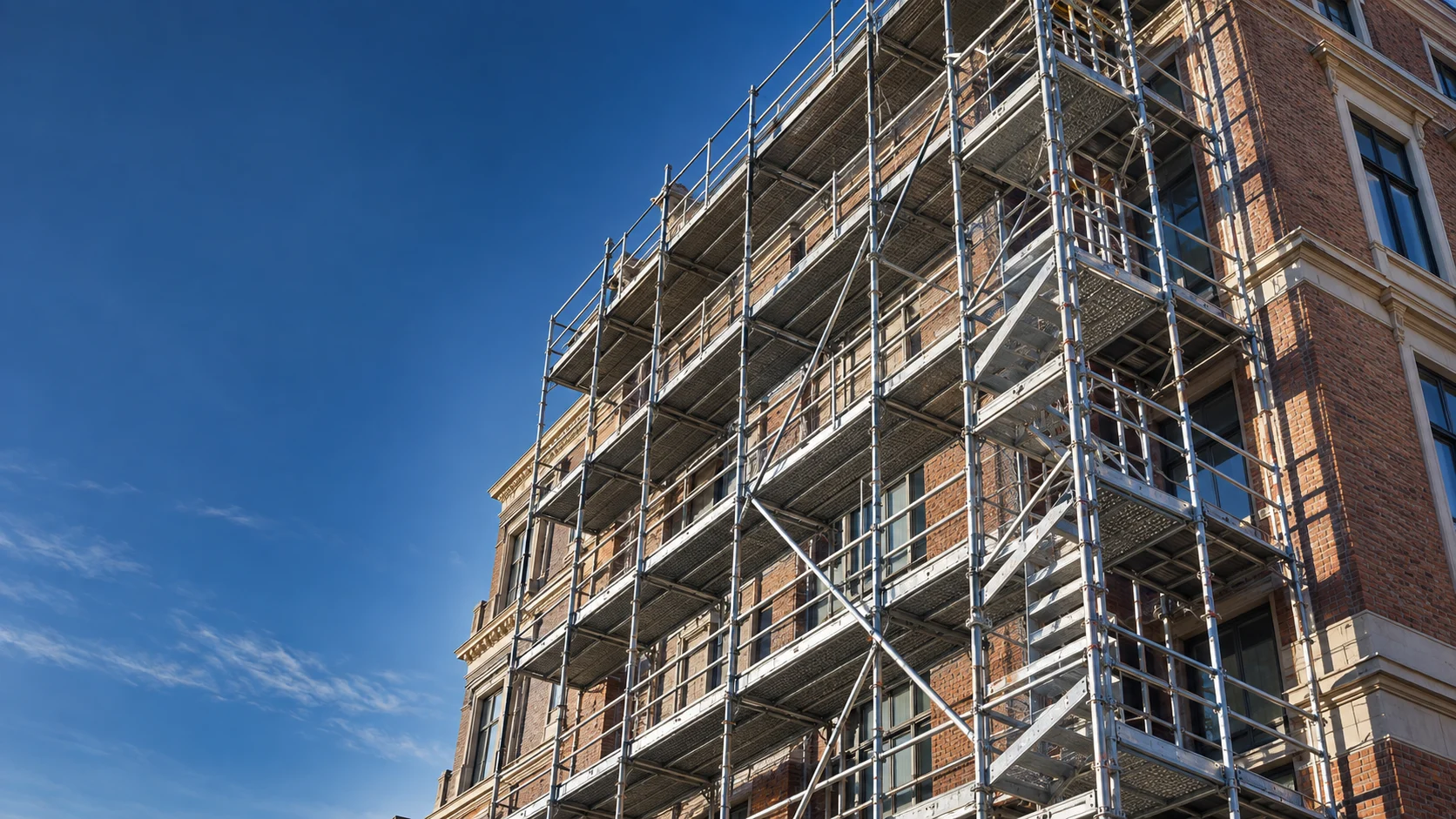
Photograph the full elevation, the ground beneath it and the route from the street. Then add details that explain awkward access, projections or sensitive surroundings.
Which overview photographs are useful?
Take an overview from a safely accessible position showing both the intended working elevation and the space in front. Add an angled view so balconies, entrance canopies and changes in depth become visible. Label each picture by location, such as street elevation or internal courtyard.
A close photograph of damaged pointing helps explain the repair, but tells the scaffold provider little about reaching the building. Establish the wider setting before concentrating on defects. Avoid leaning from windows or entering restricted areas simply to capture a clearer photograph.
Explore this subject through Site assessment.
How should you document the delivery route?
Show a possible vehicle stopping point and the route scaffold components would follow towards the erection area. Photograph narrow passages, sharp corners, stairs and changes in level separately. The tightest opening may matter more than the large empty space behind it. Explain whether gates open fully and who controls access through shared areas.
Pictures do not establish permission to park, unload or occupy common property. Those arrangements require their own discussion. Describe temporary obstructions too, particularly when bins, parked bicycles or deliveries regularly change the route.
Explore this subject through Scaffold drawing.
Which hidden conditions need explanation?
Point out basement windows, inspection covers, grilles, damaged paving and lightweight roofs without drawing conclusions about their bearing capacity. Include recently altered cladding or insulation that could affect the discussion about attachment. Explain when vegetation or screening prevents a useful view of the building.
Separating observations from assumptions makes the photo record more reliable. A photograph cannot confirm the strength of a hidden structure or establish a suitable anchoring arrangement. Professional investigation remains necessary wherever the proposed support or connection cannot otherwise be assessed.
Explore this subject through Which measurements matter for a scaffold enquiry?.
How should you label the photographic brief?
Number the images and connect them to the project address, intended tasks and preferred period. Include the photography date when work is already changing the site. Avoid identifiable passers-by, vehicle registrations and personal documents where possible. The website’s WhatsApp link includes the domain in its initial message, helping distinguish the enquiry. The standard form does not upload files, so use it to describe the project and discuss how drawings should follow.
A short, clearly labelled sequence is easier to interpret than a large collection of nearly identical views. For rear-elevation photographs, explain which entrance the photographer used. A courtyard with several gates can suggest several possible delivery routes although only one is available to this project. Identifying the relevant gate and its keyholder makes the image useful for access planning rather than merely showing an attractive view of the building.
Explore this subject through Façade access that fits the work. and Give your scaffold brief a shape..
One more
thing.
Can photographs replace a site visit?
Not in every situation. They cannot reliably reveal hidden construction or attachment conditions. Highlight unresolved issues so the provider can decide which further assessment is necessary.
Do I need aerial photographs?
No. Ground-level views usually provide a useful starting point. Do not arrange risky access or assume permission for drone flights simply to supply an initial picture.
What should I show if another scaffold is present?
Identify its owner, intended duration and any neighbouring work area. Show possible interfaces, but do not move components or assume the existing scaffold can support another structure.