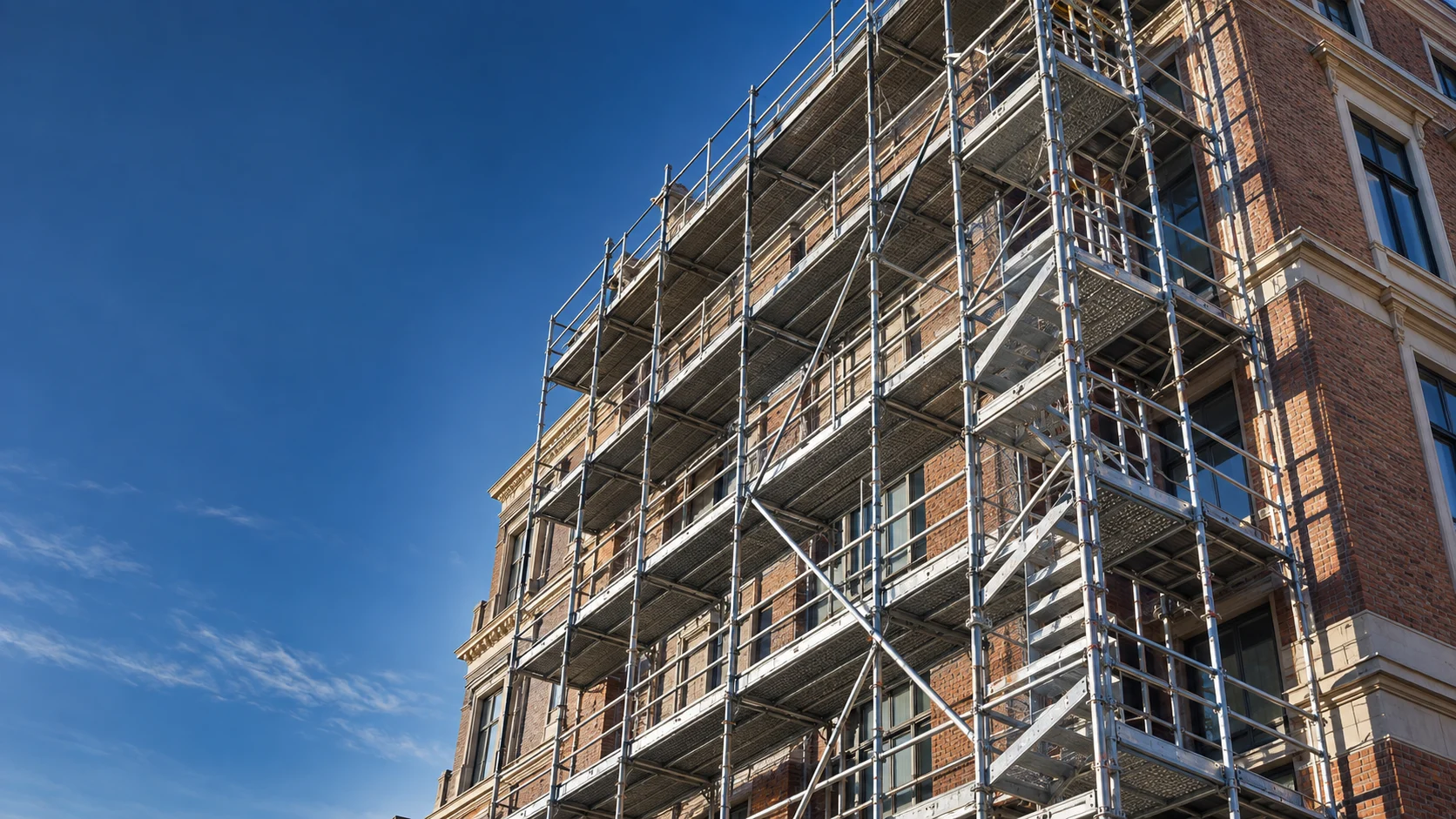
A site assessment gathers and considers location information to develop a scaffold enquiry into an appropriate project brief.
What does this mean for your project?
Assessment brings together more than elevation dimensions. Access, supporting conditions, projections and intended activities determine which questions remain open. An initial telephone description or photo set can help preparation without proving that every relevant detail has already been examined.
Identify available drawings and known changes to the property. Explain which parties will use the scaffold and which resident routes need to remain available. Uncertainty about concealed construction should be stated explicitly rather than hidden behind an apparently complete set of measurements.
After assessment, distinguish established facts from unresolved assumptions. A dimension may be confirmed while permission or work sequence remains unsettled. Ask what further information is needed before a proposal or programme becomes final, rather than treating one visit as completion of every preparatory decision.
Explore this subject through Scaffold drawing and Footprint.
One more
thing.
Does assessment always require a site visit?
That depends on the question and information available. The provider determines the required assessment; photographs cannot reveal every concealed condition.
Does an assessment authorise erection?
No. Gathering and evaluating information does not automatically confirm an order, programme or permission to install.