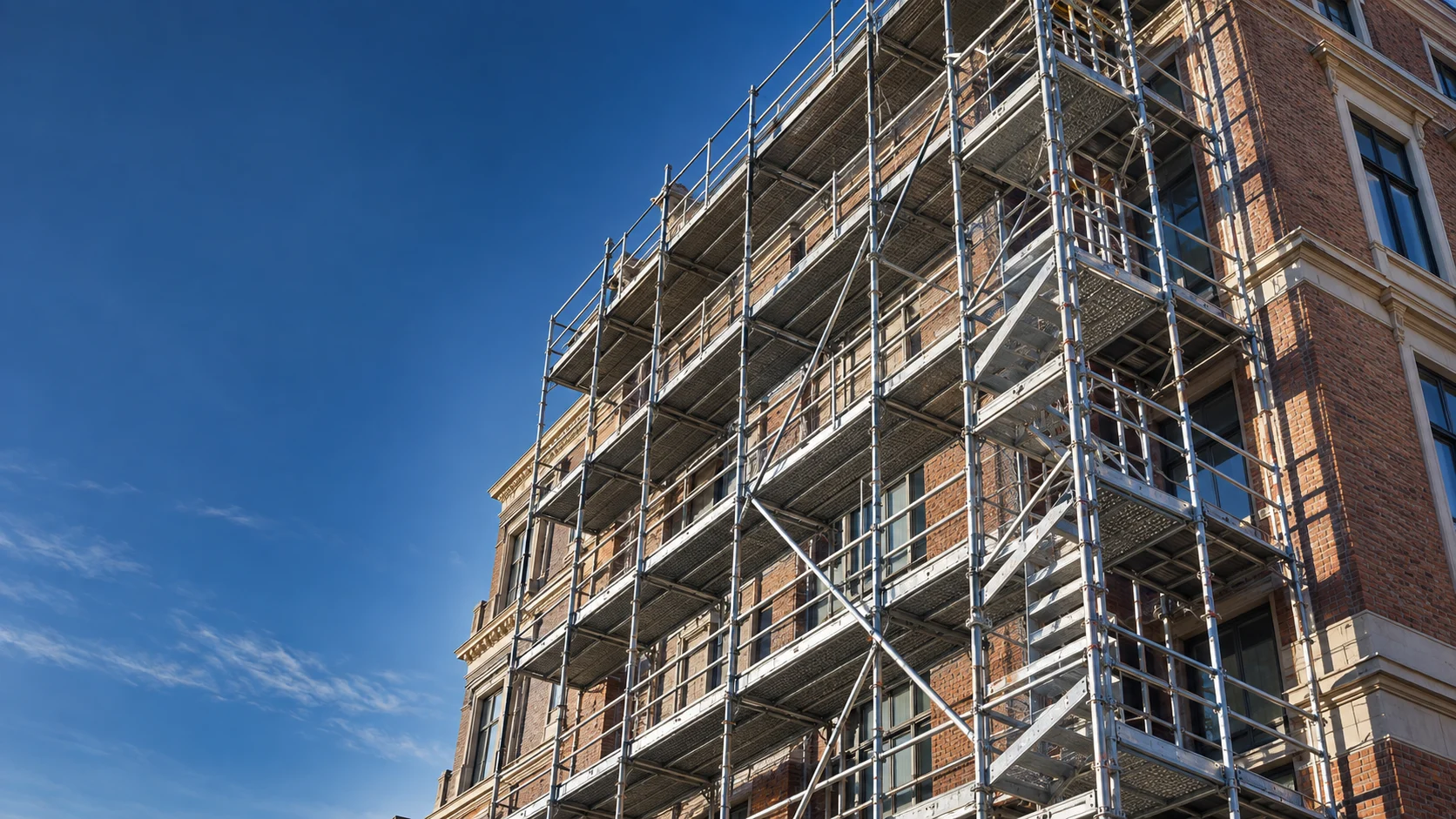
An access route is the agreed path by which users reach and leave a scaffold workplace.
What does this mean for your project?
The route includes more than a staircase or ladder. Its ground-level approach, connection onto the platform and final destination all matter. A technically available connection offers little practical access if the door leading to it remains locked during the working period.
Describe who uses the route and how frequently movement is required. Material handling may need a different provision alongside personnel access. A route for workers is not automatically intended for bulky products or for residents outside the organised construction activity.
With shared use, everyone needs the same current access information. Establish who communicates closures or changes and how obstructions are reported. Users should not independently select an alternative that takes them through an unassessed part of the structure merely to avoid a blocked entrance.
Explore this subject through Platform hatch and Footprint.
One more
thing.
Is access included in the scaffold order?
Check the route and provision actually specified in the proposal. Identify unusual access needs during the initial enquiry.
Can residents use the same route?
Not automatically. Describe resident or public use separately and have the arrangement assessed for that function.