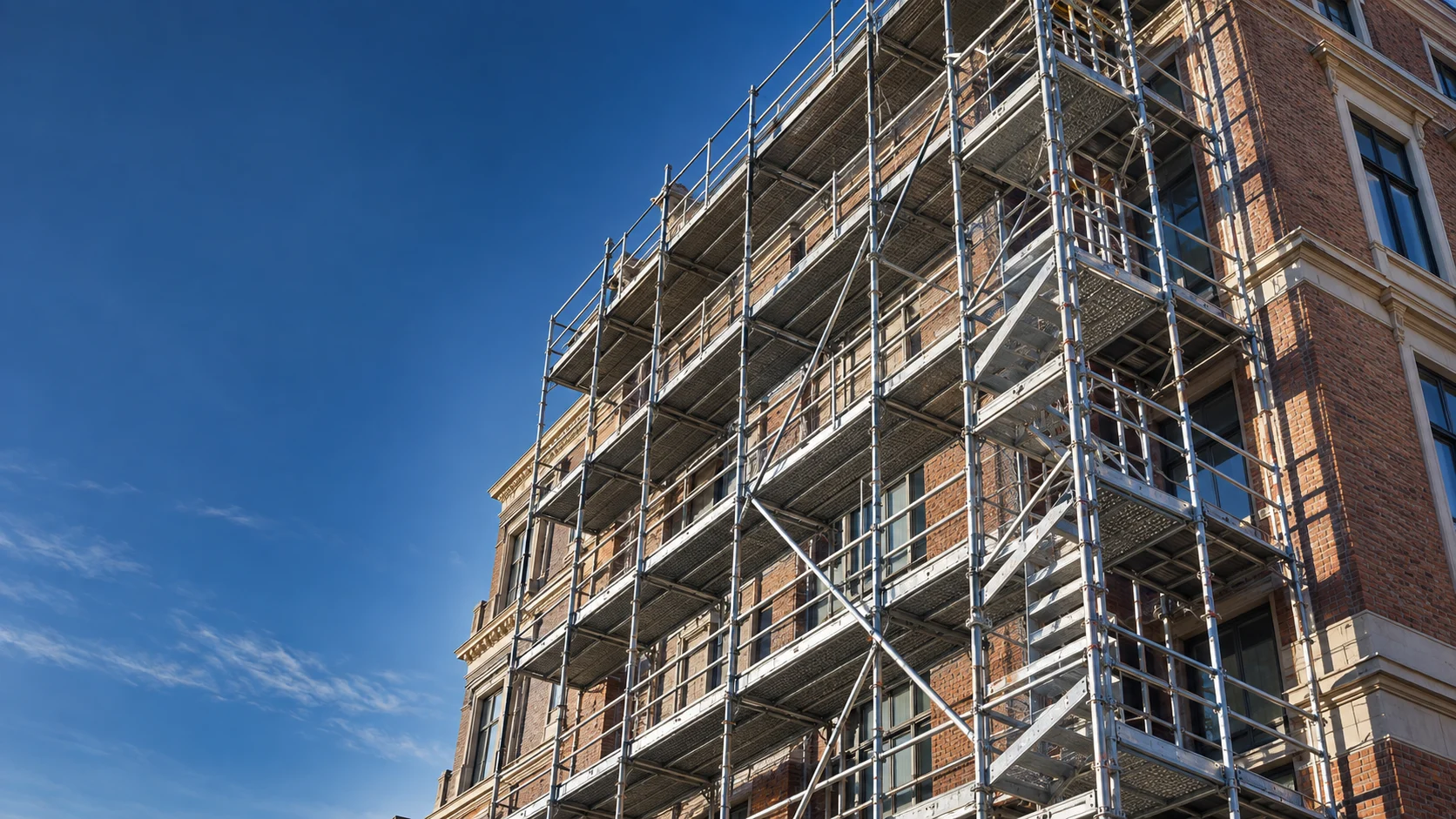
Plan from required erection through the final access for checks and repairs. Agree extension, completion notice and dismantling separately; an expected finish is not a confirmed removal appointment.
Which tasks need to fit inside the access period?
Ask every user which activities depend on the scaffold and what must finish before those activities begin. Painting might follow repairs by another contractor, while final inspection may follow completion of the finish. Record these dependencies instead of merely adding separate estimates of working days.
Distinguish preferred dates from confirmed appointments. The access programme should describe the same sequence as the façade contractor’s programme. Otherwise the hire period can appear sufficient on paper while an essential intermediate stage has not been allowed for by any of the parties.
Explore this subject through Hire period.
Which events define the contractual period?
Check the proposal for the event starting hire and the method for determining its end. Erection, release for use, completion notice and physical dismantling are separate events. The agreement should explain the financial treatment of the intervals between them; this page does not impose a universal rental condition.
Ask who receives a completion notice and how the request is recorded. Keep the confirmation with the project documents. A casual remark to another supplier on site is not equivalent to a notice processed by your contracting party under the agreed procedure.
Explore this subject through Scope of work.
How can uncertainty be described without false precision?
Identify unresolved project conditions, such as a material decision, concealed façade damage or dependence on another contractor. Ask the executing parties how those uncertainties affect their own programmes. Adding an arbitrary standard buffer can hide the issue when nobody identifies the event that would cause delay.
Agree review points for updating the expected finish. Treat the planner’s selected weeks as a starting assumption, not a reservation. If the forecast changes, explain the reason and the remaining tasks rather than sending a revised date without context.
Explore this subject through How do you request scaffold dismantling and removal?.
Who informs every user about a change?
Assign a contact to collect changes to work sequence, expected hire and removal. Make sure that information reaches later users too. A roofing contractor joining afterwards needs to know when access is available and which conditions apply. With an extension, check that public-space and building-access arrangements still match the new period. Changing a rental date alone does not resolve those other requirements.
Before final release, confirm whether each party has completed the last access needed for their work, inspection or making-good responsibilities. Separate waiting for another contractor from access still needed for the current trade’s own work. Either can extend the programme, but each requires different coordination. Naming the unresolved dependency makes an updated forecast useful rather than simply moving the end date repeatedly without explaining what must happen before removal becomes possible.
Explore this subject through Façade access that fits the work. and Give your scaffold brief a shape..
One more
thing.
Does selecting a hire period reserve equipment?
No. The planner records a preference for discussion. Availability, starting arrangements and charging conditions belong in the specific proposal and confirmed order.
When should a possible delay be reported?
Agree the reporting procedure beforehand and notify the provider when the changed forecast becomes relevant. Ask what information is needed to review the programme and extension.
Does charging always continue until physical removal?
That depends on the agreement. Clarify the relationship between completion notice, processing and dismantling before accepting the hire terms.